[] Exploring Netflix as an institution:
~ Company was established in the 1997 - DVD distribution was established in 1999.
~ An American based company providing on-demand internet streaming media in the north and south America, Scandinavia, the Caribbean, UK & Ireland. Just like LoveFilm in the UK, in the USA they also provide a DVD-by-mail service.
~ Netflix wasn't launched in the UK as a service until 2012. However, the brands awareness grew in their success in streaming original programming and support of independent film distribution. “the world’s leading internet television network” (that's how the institution describes themselves.)
~ Netflix is available across a range of devices, including smartphones, tablets, gaming consoles, and internet enabled television. This is an example of technological convergence, where two or more technologies combine in one new device/ platform/ application. For Netflix, technological convergence offers greater audience pleasures through increased accessibility and user convenience.
[] What makes Netflix different?
- The streaming market is increasingly competitive, as the technologies
used to stream VoD become ubiquitous within society. DVD rental
shops have lost their market share, with many going into administration
(Blockbusters being a notable recent case). Alongside Netflix, users
have various options including LOVEFilm, Amazon Instant Streaming,
NOW TV (Sky TV’s offering), as well as the more independent Mubu
and Curzon On Demand. Netflix seeks to maintain its popularity with
subscribers through increased personalisation.
- Previously, Netflix relied upon the user ratings to enable personalised recommendations for the subscriber. The method used to generate these recommendations did not take into consideration that one login is likely to be used by a wide ranging audience of differing tastes, ages and interests. For example, within a family household one login may be used to stream Disney-animations for the 8 year child, romantic comedies for the teenage daughter, and House of Cards for the parents. This has resulted in various entertaining recommendations.
~ Netflix has just introduced a free profile system, where users can create up to five profiles on one subscription. The intention is to offer greater individual personalisation rather than the household personalisation that the previous system offered. Personalisation is a key element to the success of Netflix, as they need to keep existing users happy as well as attract new use. Netflix’s vice president of product innovation, 75-80% of what users watch on Netflix comes from recommendations, as opposed to searched programmes.
~ the increased personalisation offers the gratifications of personal identity and social interaction (Blumler & Katz), as users feel that they are able to tailor media schedules to their own tastes, while still participating in a viewing community through the rating and recommendations. The profiles will enable Netflix to gather more detailed information about its subscribers and their viewing habits. This will enable the institution to make more informed choices about films and TV programmes to offer. “The way we’re using that data is to keep [subscribers] happy. And the way to keep [subscribers] happy is to let them watch more stuff,” (Todd Yellin, Netflix).
~ This will enable the institution to make more informed choices about
films and TV programmes to offer. “The way we’re using that data is
to keep [subscribers] happy. And the way to keep [subscribers] happy
is to let them watch more stuff,”
~ Netflix has also lead the way in developing VoD services through their acquisition of original content for distribution. Began from Splatter (2009) which received mixed reviews for Joe Dante’s direction of Corey Feldman in the lead role of Jonny Splatter. From this point Netflix took a 3 year break, coming back with the Norwegian-American comedy-drama series, Lilyhammer, and crime series, The Ropes. The altered approach to content proved popular with audiences, and led to Netflix licensing the rights to House of Cards in 2012.
[] Original drama, original distribution
~ With House of Cards, Netflix was not only able to establish itself as the leading on-demand television network, but also as a legitimate entertainment brand. Traditionally, original drama has been produced and distributed through television networks and institutions, and is a mainstay of television institutions.
~ The 50th anniversary episode of Dr Who, The Day of the Doctor (screened 23 November 2013, BBC1) was watched by over 10 million, and was the focal point of the scheduling for the week across a range of BBC platforms. The original programming here is a key driving force in the BBC’s success. This is also evidenced in other mainstream institutions: ITV’s Downton Abbey and Channel 4’s Top Boy are two examples. So, with House of Cards, we see Netflix following the traditional production model but in an emedia context.
~ House of Cards, whose entire first season of 13 episodes, premiered on 1 February 2013, is a political episodic drama starring Kevin Spacey, with David Fincher (The Social Network, 2010) directing. The credentials of this partnership enabled Netflix to establish their brand as a leading on-demand television network. The series was exclusively available on Netflix, encouraging audiences to subscribe. he move away from the traditional model of on-demand streaming, and the episodic nature of the programme established audience loyalty that was more predictable than previously experienced. Netflix purchased the rights initially to 26 full episodes prior to production commencing, and the deal was rumoured to be $100 million.
~ This is not alien to traditional institutions when producing TV dramas – ITV1’s Downton Abbey cost £1m per episode, a cost which was recouped through advertising revenues. However, it is important to note the distinct difference in the distribution model of Netflix, as opposed to other institutions that utilise on-demand streaming.
~ One reason for Netflix’s popularity is the concept of access; in previous on-demand models, audiences could only access a limited amount of material for a limited amount of time: iPlayer will have some programmes available for 7 days, some longer, but a series will not be available in completion before it is broadcast on TV. This is due to the constraints of the multi-platform model – you cannot maintain the episodic nature of a TV series on broadcast if you are premiering all episodes online at once. However, Netflix do not have the constraint of multi-platforms, so have the freedom to exploit the immediacy of emedia: for perhaps the first time, Netflix was offering audiences the kind of viewing pleasures that they would only normally get from purchasing the DVD box set, and then watching it in its entirety.
- Previously, Netflix relied upon the user ratings to enable personalised recommendations for the subscriber. The method used to generate these recommendations did not take into consideration that one login is likely to be used by a wide ranging audience of differing tastes, ages and interests. For example, within a family household one login may be used to stream Disney-animations for the 8 year child, romantic comedies for the teenage daughter, and House of Cards for the parents. This has resulted in various entertaining recommendations.
~ Netflix has just introduced a free profile system, where users can create up to five profiles on one subscription. The intention is to offer greater individual personalisation rather than the household personalisation that the previous system offered. Personalisation is a key element to the success of Netflix, as they need to keep existing users happy as well as attract new use. Netflix’s vice president of product innovation, 75-80% of what users watch on Netflix comes from recommendations, as opposed to searched programmes.
~ the increased personalisation offers the gratifications of personal identity and social interaction (Blumler & Katz), as users feel that they are able to tailor media schedules to their own tastes, while still participating in a viewing community through the rating and recommendations. The profiles will enable Netflix to gather more detailed information about its subscribers and their viewing habits. This will enable the institution to make more informed choices about films and TV programmes to offer. “The way we’re using that data is to keep [subscribers] happy. And the way to keep [subscribers] happy is to let them watch more stuff,” (Todd Yellin, Netflix).
~ Netflix has also lead the way in developing VoD services through their acquisition of original content for distribution. Began from Splatter (2009) which received mixed reviews for Joe Dante’s direction of Corey Feldman in the lead role of Jonny Splatter. From this point Netflix took a 3 year break, coming back with the Norwegian-American comedy-drama series, Lilyhammer, and crime series, The Ropes. The altered approach to content proved popular with audiences, and led to Netflix licensing the rights to House of Cards in 2012.
[] Original drama, original distribution
~ With House of Cards, Netflix was not only able to establish itself as the leading on-demand television network, but also as a legitimate entertainment brand. Traditionally, original drama has been produced and distributed through television networks and institutions, and is a mainstay of television institutions.
~ The 50th anniversary episode of Dr Who, The Day of the Doctor (screened 23 November 2013, BBC1) was watched by over 10 million, and was the focal point of the scheduling for the week across a range of BBC platforms. The original programming here is a key driving force in the BBC’s success. This is also evidenced in other mainstream institutions: ITV’s Downton Abbey and Channel 4’s Top Boy are two examples. So, with House of Cards, we see Netflix following the traditional production model but in an emedia context.
~ House of Cards, whose entire first season of 13 episodes, premiered on 1 February 2013, is a political episodic drama starring Kevin Spacey, with David Fincher (The Social Network, 2010) directing. The credentials of this partnership enabled Netflix to establish their brand as a leading on-demand television network. The series was exclusively available on Netflix, encouraging audiences to subscribe. he move away from the traditional model of on-demand streaming, and the episodic nature of the programme established audience loyalty that was more predictable than previously experienced. Netflix purchased the rights initially to 26 full episodes prior to production commencing, and the deal was rumoured to be $100 million.
~ This is not alien to traditional institutions when producing TV dramas – ITV1’s Downton Abbey cost £1m per episode, a cost which was recouped through advertising revenues. However, it is important to note the distinct difference in the distribution model of Netflix, as opposed to other institutions that utilise on-demand streaming.
~ One reason for Netflix’s popularity is the concept of access; in previous on-demand models, audiences could only access a limited amount of material for a limited amount of time: iPlayer will have some programmes available for 7 days, some longer, but a series will not be available in completion before it is broadcast on TV. This is due to the constraints of the multi-platform model – you cannot maintain the episodic nature of a TV series on broadcast if you are premiering all episodes online at once. However, Netflix do not have the constraint of multi-platforms, so have the freedom to exploit the immediacy of emedia: for perhaps the first time, Netflix was offering audiences the kind of viewing pleasures that they would only normally get from purchasing the DVD box set, and then watching it in its entirety.
~ Waiting for the DVD box
sets in order to get similar access would mean that audiences would
have to avoid a series (and the spoilers) across all platforms; this is
almost impossible in our contemporary media landscape.
~ Following the success of House of Cards, Netflix have developed and replicated the model; Hemlock Grove is a horror thriller which premiered 19 April 2013, with all 13 episodes being immediately available to watch online. The genre of horror thriller engages the audiences’ desire to resolve the enigmas, so they are likely to watch 2 or 3 episodes at once. Audience again show an increase of loyalty to the brand.
[] Future of Television?
~ Following the success of House of Cards, Netflix have developed and replicated the model; Hemlock Grove is a horror thriller which premiered 19 April 2013, with all 13 episodes being immediately available to watch online. The genre of horror thriller engages the audiences’ desire to resolve the enigmas, so they are likely to watch 2 or 3 episodes at once. Audience again show an increase of loyalty to the brand.
[] Future of Television?
Netflix have established a new and secure model for on-demand
internet streaming of television products. Netflix have made it known
that they are keen to develop their own content rather than bulk-buying
in existing content; current contracts with Nickelodeon and MTV do
not look as if they will be renewed. The bulk of British television
on-demand is focused on catch-up, although there have been some
forays into online exclusive premieres – namely Bad Education and
Some Girls, both BBC3 – and the comedy Impractical Jokers was
commissioned by BBC3 following an online pilot. In this way, it may
seem as if on-demand streaming may offer an extension to the viewing
experience, as opposed to its immediate death.
______________________________________________________________________________
[Institution research - Netflix]
http://www.cnbc.com/2017/04/13/netflix-earnings-preview-q1-2017.html - Lower subscriber growth could hurt Netflix's first quarter earnings, analysts warn;
- Netflix will report its first quarter earnings after the closing bell on Monday. It is expected to have $2.64 billion in revenue, marking about 35 percent year-over-year increase. Earnings per share is estimated at $0.38.
- The company is expected to announce it added 5.3 million subscribers during the first quarter, marking a slowdown from 7.1 million last quarter and 6.7 million the year prior. Growth is expected mostly from international viewers, while the U.S. market cools as it reaches subscriber saturation.
- There is hope the second quarter will get a higher subscriber boost. Shows like "13 Reasons Why" released during the first quarter have been topping social media mentions, and fan favorites "House of Cards" and "Orange is the new Black" are returning. Most of the new series that are coming out are catching the younger audiences.
- Netflix will also have to face more competitors in the over-the-top (OTT) TV space, or TV service that is not reliant on cable or satellite services. Google is launching its YouTube TV service this year, and Hulu will also have an OTT service out this year. Dish Network and AT&T, through DirecTV, are also bolstering their offerings. Meanwhile, Amazonhas also increased its original content.
- Increasing premium programming also means that Netflix will have to spend more on content. Wedbush analyst Michael Pachter said the company is expected to spend $7 billion in content in 2017, up from $6 billion in 2016.
http://www.investors.com/news/technology/netflix-q1-subscriber-tally-seen-on-cusp-of-100-million/ - Netflix Is This Close To Reaching 100 Million Subscriber Mark;
- Netflix (NFLX) could be on the cusp of 100 million worldwide subscribers when it reports first-quarter earnings after the market close on Monday, analysts say.
- If the streamer tops expectations for subscriber growth, it could reach the milestone. This could be done due to the shows that are just being released especially the series "13 reasons why."
- Netflix added just over 7 million new streaming video customers after guiding to 5.2 million in the fourth quarter. Netflix ended 2016 with 93.8 million subscribers worldwide, with 49.43 million of them in the U.S.
- Experts and analysts such as Heath Terry have said that internatioal markets such as France, Germany are maturing. Millions of international subscribers are adding on to the Netflix subscribers now.

- The chief censor, Dr Andrew Jack, has requested a classification after being alerted to the series "strong" content by a member of the public, Office of Film and Literature Classification senior advisor Henry Talbot said.
______________________________________________________________________________
Media Magazine _
MM31:
Pg58:
-
TV series had already complicated the idea of
hero because so many of the villains looked like the heroes, and we knew that
some members of the heroic group were villains in disguise
-
TV drama
still throws out its conventional heroes, and in many procedural dramas the
main character (however flawed) acts heroically and ‘saves the day’ whilst taking
a moral stand that all can admire
Pg66:
-
All television programmes offer their viewers the
opportunities to experience Blumler and Katz’s Use and Gratification of personal
identification.
-
Where it differs from other shows is the breadth
of opportunities it offers its viewers to identify with its cast. Most shows feature
one or two rounded characters that fit into conventional stereotypes to appeal
to a mainstream audience
-
Most of the cast in any tv drama are supposed to be in their early to mid-twenties
also offers the generic codes of slasher films, which could potentially
help to extend the show’s appeal to a teenage audience who characteristically
enjoy this kind of movie’s emphasis on creative butchery and slaughter. Therefore,
from a producer’s point of view this kind of programme (horror) should attract
a wide range of potential audiences, including those that fit into sub-cultural
and mainstream social demographics
MM35:
-
TV shows, then we are limiting ourselves to the
mainstream. These texts are invariably commercial in nature. Their prime
function is to make money for their producers by reaching and pleasing the
largest possible audiences; and this, inevitably, means that many viewpoints
are marginalised, or not even heard. Far from being democratic, commercial
texts tend to reproduce only the dominant, most bourgeois worldview.
MM50:
-
Although Lionsgate has four divisions, which include
both the television and music industries, and even though it produces
television programmes, such as Orange is the New Black for Netflix, and part-owns
nine cable television channels, some of which do play the company’s films and
television programmes, it is nevertheless a small company. In terms of size it
cannot compare with established Hollywood.
____ Web Research ____[Institution research - Netflix]
http://www.cnbc.com/2017/04/13/netflix-earnings-preview-q1-2017.html - Lower subscriber growth could hurt Netflix's first quarter earnings, analysts warn;
- Netflix will report its first quarter earnings after the closing bell on Monday. It is expected to have $2.64 billion in revenue, marking about 35 percent year-over-year increase. Earnings per share is estimated at $0.38.
- The company is expected to announce it added 5.3 million subscribers during the first quarter, marking a slowdown from 7.1 million last quarter and 6.7 million the year prior. Growth is expected mostly from international viewers, while the U.S. market cools as it reaches subscriber saturation.
- There is hope the second quarter will get a higher subscriber boost. Shows like "13 Reasons Why" released during the first quarter have been topping social media mentions, and fan favorites "House of Cards" and "Orange is the new Black" are returning. Most of the new series that are coming out are catching the younger audiences.
- Netflix will also have to face more competitors in the over-the-top (OTT) TV space, or TV service that is not reliant on cable or satellite services. Google is launching its YouTube TV service this year, and Hulu will also have an OTT service out this year. Dish Network and AT&T, through DirecTV, are also bolstering their offerings. Meanwhile, Amazonhas also increased its original content.
- Increasing premium programming also means that Netflix will have to spend more on content. Wedbush analyst Michael Pachter said the company is expected to spend $7 billion in content in 2017, up from $6 billion in 2016.
http://www.investors.com/news/technology/netflix-q1-subscriber-tally-seen-on-cusp-of-100-million/ - Netflix Is This Close To Reaching 100 Million Subscriber Mark;
- Netflix (NFLX) could be on the cusp of 100 million worldwide subscribers when it reports first-quarter earnings after the market close on Monday, analysts say.
- If the streamer tops expectations for subscriber growth, it could reach the milestone. This could be done due to the shows that are just being released especially the series "13 reasons why."
- Netflix added just over 7 million new streaming video customers after guiding to 5.2 million in the fourth quarter. Netflix ended 2016 with 93.8 million subscribers worldwide, with 49.43 million of them in the U.S.
- Experts and analysts such as Heath Terry have said that internatioal markets such as France, Germany are maturing. Millions of international subscribers are adding on to the Netflix subscribers now.
https://www.fool.com/investing/2017/04/13/millennials-love-netflix-but-will-they-pay-for-it.aspx - Milennials love Netflix, but will they pay for it?
- Netflix, Inc. have reported having subscribers in nearly 51 million households in the U.S., or approximately 43% of U.S. homes. But domestic growth appeared to be slowing in 2016, which led some analysts to speculate that the market for U.S. customers might be nearing saturation. But recent data suggests that there may be a group of untapped subscribers waiting in to subscribe to the streaming service.
- Of the 6,567 millennials surveyed, 54% reported using the Netflix account of a friend or family member, and 5% reported using the account of a current or former significant other. Another 34% said they had their own Netflix account, and 8% indicated that they did not have Netflix at all.
http://www.bizjournals.com/sanjose/news/2017/04/13/netlix-eyes-california-as-home-base-for-more-shows.html - Netflix eyes California as home base for more shows, could bank big merchandising bucks.
- Netflix is potentially sitting on a billion dollars in merchandise-based revenue, according to analysts they are hoping that the company moves back the production back to California.
- Mark Machinery Los Gatos-based streaming service has a standalone billion-dollar revenue opportunity as it revs up merchandise sales based on its popular original series. While full realization of this revenue stream is far in the future, Mahaney cited the recent brisk sales of “Stranger Things” merchandise at retailer Hot Topic.
[TV Series research on Netflix]
http://uk.businessinsider.com/netflix-original-shows-vs-hbo-vs-amazon-2017-4?r=US&IR=T - Netflix's originals keep getting better and better;
- Netflix keeps on getting better in what they produce for their audience but also their investment are just as big. Netflix is set to spend $6 billion on content in 2017, more than rival Amazon,which JPMorgan estimates will spend $4.5 billion, and many times HBO.
- Netflix's CFO said last year that the company is moving toward a 50/50 mix of original and licensed content.
- 33% of respondents to Morgan Stanley’s survey said Netflix had the best original programming of any streaming service or premium TV network. Not just good: “the best.” That’s up from 17% in 2014.
- Netflix snagged its first Golden Globe in a major show category when "The Crown" won best drama series. ("Stranger Things" was nominated in the same category.) Netflix is also rolling out new show formats at a rapid clip, from its game-show debut "Ultimate Beastmaster," to locally-produced shows from regions around the world.
- Netflix's quality keeps going up and up, even in a "peak TV" world of 455 scripted TV shows in 2016.
https://www.theguardian.com/tv-and-radio/2017/apr/11/the-crown-royally-sweeps-the-2017-bafta-tv-awards-nominations - The Crown royally sweeps the 2017 Bafta TV awards nominations.
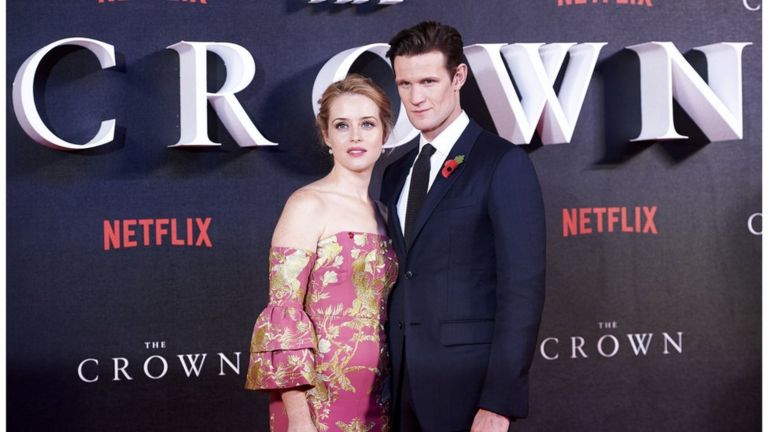
- Netflix’s ambitious and opulent original drama about a young Queen Elizabeth II, has swept this year’s Bafta TV nominations. As well as being among the best drama series nominees, the series picked up a best female performance nod for Claire Foy for her role as Elizabeth, as well as supporting actor nominations for Jared Harris and John Lithgow and supporting actress for Vanessa Kirby.
- The series’ five nominations are further affirmation that the £100m Netflix invested in making The Crown was worth the risk, and is a further indicator that streaming platforms are the places pushing the envelope when it comes to creating original drama.
http://www.express.co.uk/showbiz/tv-radio/789664/The-Crown-season-3-Camilla-Parker-Bowles-Prince Charles-Netflix-Princess-Diana - The Crown season 3: Camilla Parker Bowles CONFIRMED to make appearance
- CAMILLA, the Duchess of Cornwall is set to be appearing in season three of Netflix drama The Crown, it has been revealed.
- Producer Suzanne Mackie confirmed the news today at the BFI & Radio Times Festival in London today (April 9th 2017) during a Q&A on the hit show. Suzanne also said that The Crown creator Peter Morgan had plans make five more seasons of the series and write all of them himself as well.
- "Peter is already talking about the most wonderful things. We start meeting Camilla Parker Bowles in season three."
- The producer continued: "We have to be honest, season three and four are being mapped out and the closer the history comes – I now can say, ‘God, I know exactly what I was feeling when that happened, I remember that and I remember this.’ That’s so exciting. “But there’s a responsibility to it that you ought to do it properly and there’s where the weight comes, not from seven years but we’ve got to keep being great."
http://www.stuff.co.nz/entertainment/91537383/13-reasons-why-prompts-warnings-and-new-classification-request - 13 Reasons Why prompts warnings and new classification request;
- 13 Reasons Why, a 13-part show about a teenage girl who commits suicide, was released in New Zealand on March 31 and has been given an adult rating by Netflix. In addition to suicide the series includes rape, drug use and bullying. A graphic content warning precedes four of episodes.
- The chief censor, Dr Andrew Jack, has requested a classification after being alerted to the series "strong" content by a member of the public, Office of Film and Literature Classification senior advisor Henry Talbot said.
"Being that it is likely to be of interest to a younger audience it is particularly important that Netflix viewers are given trusted information about the content and the potential harm to young people."
- Classification would take two weeks and involve consultation with some teenagers and consideration of the Ministry of Health's guidelines for media portrayals of suicide. Netflix would have an opportunity to make a submission.
http://www.refinery29.com/2017/04/149969/katherine-langford-selena-gomez-13-reasons-why - Selena Gomez Convinced This 13 Reasons Why Star To Go Public On Instagram.
- The 13 Reasons Why star, who portrays the late Hannah Baker on Netflix's new drama, admitted that it was the "Heart Wants What It Wants" (Selena Gomez) singer who convinced her to open up her Instagram account to the masses.
- Hollywood newcomer Langford admitted that she wasn't too keen on sharing her life via social media. Unlike celebrities like Kylie Jenner, whose additions to their social platforms routinely make headlines and are an integral part of their brand, the actress wanted to keep her job about "the work" — not her OOTD. Selena Gomez then reminded the Netflix star just how much good connecting with fans can do — especially considering the deeply relatable subject matter of her high school drama.
- Anything that is created for the tv screens and for a large audience, social media is always a platform where the audience will want to know about more of the actors/actress or even about the store. Social media is a big platform where communications but also searching and looking for people we want to see/hear more from.
http://www.digitalspy.com/tv/ustv/news/a825957/13-reasons-why-breaks-netflix-record-most-tweeted-about-show/ - 13 Reasons Why has broken the record for Netflix's most-tweeted-about show
- The hard-hitting teen drama has become the streaming service's most-tweeted-about show, having logged more tweets about it than any other series during its first week of streaming. There were OVER 3.5 MILLION TWEETS posted between the shows premiere date of March 31st and April 7th.
- 3,585,110 tweets about the show, which almost doubles the record of Netflix's second most-tweeted-about show Chasing Cameron, which amassed 1,326,010 tweets during the same period.
- Fizziology was also confirmed by Twitter, who said 13 Reasons Why generated more than 3.2 million tweets during its first week, making it the most-tweeted-about streaming TV series of the year so far, according to the social media firm.
- The hits or likes about Orange is the New Black or Stranger Things didn't even come close to what 13 Reasons Why has.
- The show did get criticism to having the death scene of Hannah's was very graphic and in detail - the producers had said; "We worked very hard not to be gratuitous," said show creator Brian Yorkey. "But we did want it to be painful to watch, because we wanted it to be very clear that there is nothing, in any way, worthwhile about suicide."
http://junkee.com/13-reasons-why-netflix-teen-suicide/101855 - Does ’13 Reasons Why’ Do More Harm Than Good On Teen Suicide?
- The story oscillates between the narrative Hannah weaves, and the impact her death has had on her school community, including ensuing legal action by Hannah’s parents against the school. Not only does Hannah record the tapes about the events that led up to her suicide, she also makes arrangements to have the tapes delivered to each person implicated in the story. She lets everyone know the impacts and the effect it has on her and what the people had done. The story is powerful and deep.
- Is this unrealistic in terms of leaving tapes behind and exaggerating? Is this pressuring those who are struggling to see this as something that is an option? The scene is sickening and overly salacious, and carries with it all the worst risks of bad representation. It also undermines the story
- If it makes viewers embrace compassion, all the better. But this representation of suicide is a dangerous one. It might be too salacious for its — and our — own good.